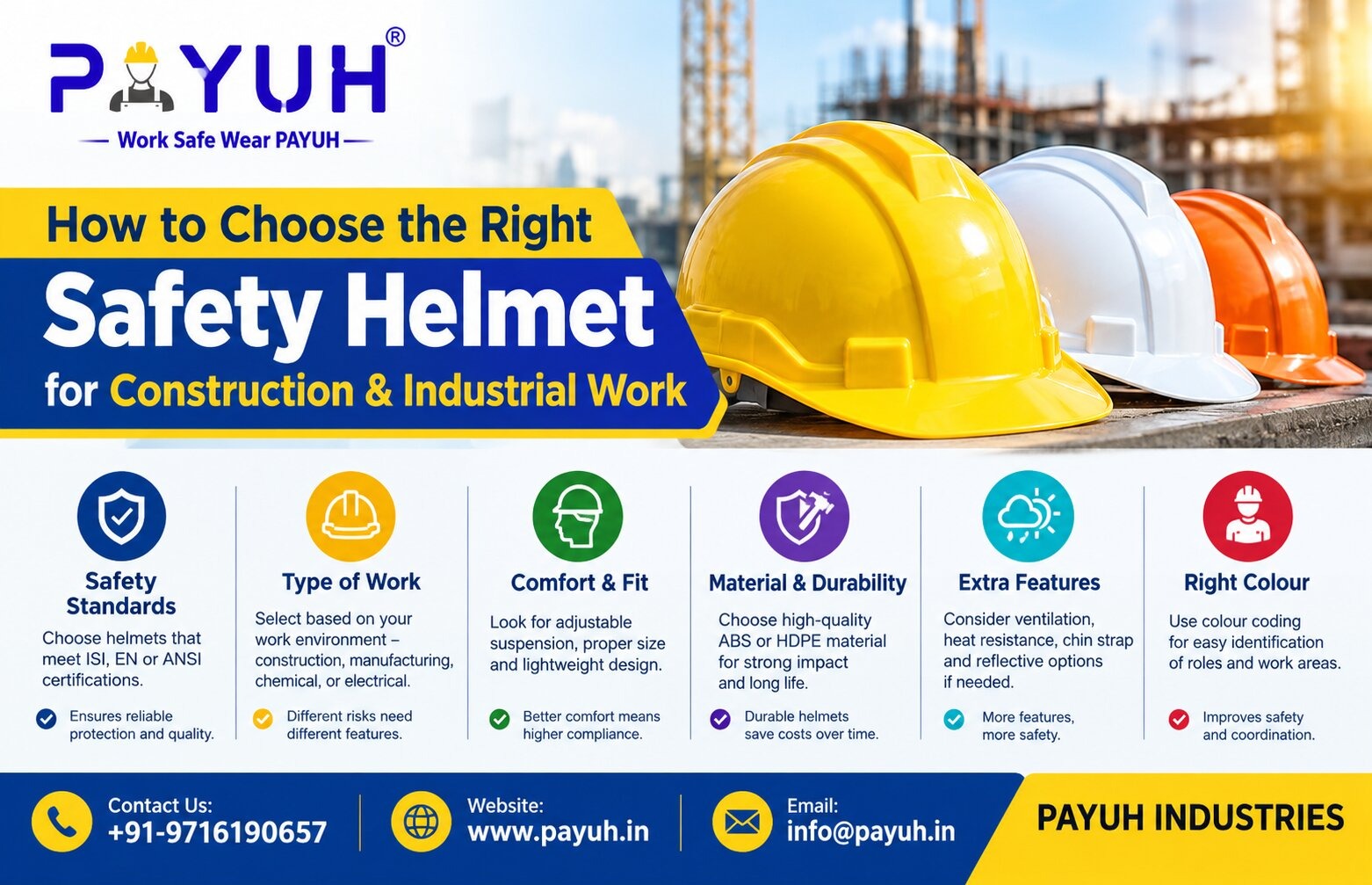
In construction sites, manufacturing facilities, warehouses, infrastructure projects, and other industrial environments, head protection is an essential part of workplace safety. Workers may be exposed to falling objects, accidental impacts, electrical hazards, debris, and other workplace risks. Choosing the right safety helmet can therefore play an important role in protecting employees and supporting a stronger workplace safety program.
For businesses, selecting a safety helmet is not simply about finding an affordable product. Procurement teams, contractors, safety managers, and project supervisors need to consider protection requirements, workplace conditions, comfort, fit, durability, applicable safety standards, and the needs of the workforce.
When evaluating suppliers, businesses should work with experienced Safety Equipment Manufacturers that can provide clear product specifications, consistent quality, and reliable bulk supply for construction and industrial applications.
Construction and industrial workplaces can involve multiple hazards at the same time. Workers may move between different areas of a site where conditions can change throughout the day.
A properly selected helmet can help provide protection against impacts and falling objects while supporting comfortable use during long working hours. The right helmet should be appropriate for the specific hazards present at the workplace and should be used according to the manufacturer's instructions.
For employers, selecting suitable head protection can also form an important part of an overall personal protective equipment (PPE) program. When choosing a Safety Helmet for Workers, organizations should consider the nature of the job, workplace hazards, fit requirements, and expected duration of use.
The first step is to understand the risks workers are likely to face.
Construction sites may have hazards such as:
Industrial facilities can present different risks depending on the nature of the operation. A warehouse, manufacturing plant, power-related facility, and infrastructure project may all require different considerations.
Before purchasing helmets in bulk, businesses should conduct a workplace hazard assessment and identify the level and type of protection required.
Safety helmets should meet the relevant safety requirements and standards applicable to their intended use and location.
When purchasing PPE for a workforce, procurement teams should verify the manufacturer's product specifications, certification or conformity information, and intended application. Procurement teams should evaluate each product based on its safety specifications, intended application, quality, and suitability for the working environment.
For large B2B purchases, it is also useful to request technical documentation from the supplier before finalizing an order. This can help safety officers and procurement teams compare products more confidently.
A Ratchet Safety Helmet can be considered when an organization needs an adjustable head-protection option that allows workers to achieve a more secure fit through a simple adjustment mechanism.
The material used in a safety helmet can influence its durability, weight, and performance.
Depending on the product design and intended application, helmets may be manufactured using materials such as high-density polyethylene (HDPE), ABS, or other engineered materials.
When comparing products, businesses should look beyond the outer shell and consider the overall construction, including the suspension system, adjustment mechanism, chin strap compatibility, and other components.
A robust helmet designed for demanding working conditions can be a practical choice for construction and industrial environments where PPE is used regularly.
A properly fitted helmet should sit comfortably and securely on the worker’s head during use.
An improperly fitted helmet can move during work, become uncomfortable, or fail to remain in the appropriate position during an incident. Look for helmets with adjustable suspension systems that allow workers to achieve a secure and comfortable fit.
For organizations purchasing helmets for large teams, adjustable models can be particularly useful because workers may have different head sizes and fitting requirements.
Depending on the workplace and organizational requirements, an Executive Safety Helmet may be considered where a particular helmet style or design is preferred for supervisors, site management, or specific professional applications. Businesses should prioritise safety specifications, workplace requirements, and worker comfort when selecting the appropriate helmet.
Construction and industrial workers may wear head protection for several hours each day. Comfort should therefore be an important consideration when selecting PPE.
Features worth evaluating include:
Comfort is not merely a convenience. If PPE is uncomfortable or difficult to adjust, workers may be more likely to use it incorrectly or remove it unnecessarily.
For businesses operating in demanding environments, models such as a Nap Safety Helmet should be evaluated according to their specific product specifications, intended application, and compliance requirements before bulk procurement.
Workers often need more than a safety helmet. Depending on their job, they may also require safety glasses, hearing protection, face shields, respirators, welding protection, or other PPE.
Before placing a bulk order, check whether the selected helmet can work appropriately with the other protective equipment used by your workforce.
For example, construction workers may need head protection together with eye and face protection, while certain industrial applications may require additional accessories.
A well-planned PPE selection process should consider the complete protection system rather than evaluating the helmet in isolation.
Learn More: https://payuhindustries.blogspot.com/2026/08/complete-ppe-solutions-for-construction.html
Construction and industrial environments can be demanding. Safety helmets used in demanding work environments should be selected to withstand the conditions and level of use expected at the workplace.
Businesses should therefore evaluate the expected working environment before selecting a product.
Consider questions such as:
Understanding these factors can help organizations select PPE that is better suited to their operational requirements.
For B2B buyers, cost is naturally an important factor. However, purchasing the cheapest available helmet may not always provide the best overall value.
Procurement teams should consider the total value of the product, including:
A reliable supplier can also make repeat procurement easier when organizations need to equip new employees, replace damaged PPE, or supply multiple project locations.
For businesses purchasing safety helmets in larger quantities, supplier selection is just as important as product selection.
Before placing a B2B order, ask the supplier about:
A professional supplier should be able to provide clear product information and help buyers understand whether a particular helmet is suitable for their intended application.
Even a high-quality safety helmet should not be treated as maintenance-free PPE.
Workers and supervisors should inspect helmets regularly for visible damage, cracks, deformation, deterioration, or problems with the suspension and adjustment system.
A helmet that has experienced a significant impact may require replacement even if visible damage is not immediately obvious. Organizations should follow the manufacturer's inspection, maintenance, replacement, and service-life recommendations.
Keeping a simple PPE inspection and replacement process can help businesses maintain consistent safety practices across the workforce.
For construction companies, contractors, infrastructure developers, factories, warehouses, and industrial organizations, PPE procurement often involves supplying equipment to multiple workers or project locations.
A reliable safety equipment supplier can help businesses source consistent products, manage bulk requirements, understand technical specifications, and maintain a dependable PPE supply.
Instead of selecting safety helmets only on appearance or price, organizations should evaluate protection requirements, product specifications, quality, comfort, and supplier reliability together.
Choosing the right safety helmet for construction and industrial work requires more than simply selecting a helmet that looks strong. Businesses should begin with a clear understanding of workplace hazards and then evaluate safety requirements, product construction, fit, comfort, durability, PPE compatibility, and supplier reliability.
For B2B buyers, the right approach is to select head protection that matches the actual working environment and supports the organization's broader workplace safety program.
Whether you are purchasing PPE for a construction project, manufacturing facility, warehouse, infrastructure site, or industrial workforce, taking the time to compare safety helmets carefully can help create a more consistent and responsible approach to worker protection.
Choose safety equipment based on the hazards, the application, and the people who will use it—not simply the price tag.
#SafetyEquipmentManufacturers #SafetyHelmetforWorkers #RatchetSafetyHelmet